IDA – Learning to Assess Lighting

•March 2, 2013 • 5 Comments

According the to the International Dark-Sky Association (IDA)

“Light pollution is growing at the rate of 4%- far faster than the population.”

My first thought after reading this was, “Huh??”. Then again, does it really surprise me? Does it surprise you? As amateur astronomers, our desire for dark skies may seem a little self-centered to those who haven’t caught the bug for spending hours hugging a telescope in the middle of a chilly night. The number of people I run across during outreach events that haven’t seen the Milky Way or even know what the Milky Way is, is mind-boggling in itself. Setting our hobby to the side for a moment, let’s think about other areas affected by light pollution. Again, from the IDA –

…poor lighting threatens astronomy, disrupts ecosystems, affects human circadian rhythms, and wastes energy to the tune of $2.2 billion per year in the U.S. alone.

Ok, I’ll take my chances with the disruption of my biological clock, after all, I’ve learned to grab a few hours’ sleep here and there for the sake of observing. What I’m not alright with is how light pollution may jeopardize the health of my loved ones, and I’m especially concerned about the ecosystem. We pat ourselves on the back for turning off lights when leaving a room or because we’ve switched to energy-saving light bulbs. Surely there’s more we could…should…be doing to preserve our night skies.
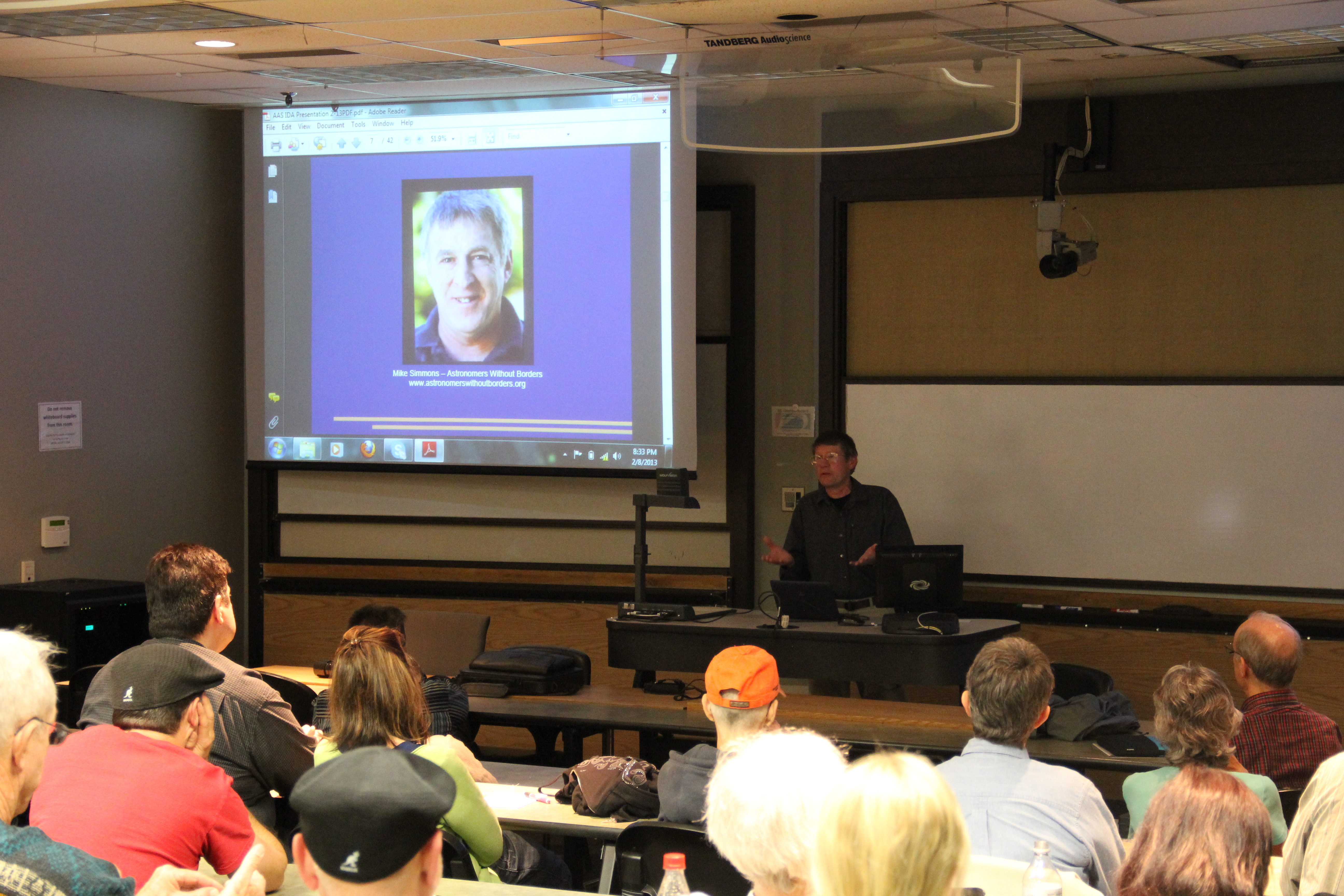
Steve Bosbach's IDA presentation at the AAS monthly meeting in February

Steve Bosbach’s IDA presentation at the AAS monthly meeting in February

After learning more about the IDA from Steve Bosbach, our astro club’s representative and now a Texas IDA coordinator, I wanted to lend a hand in some way. He gave a presentation during one of our club meetings and has repeatedly requested help to assess lighting at state parks in Texas. I volunteered. It’s my hope that others will follow suit.

Yesterday, Steve and I met at one of my regular recreational spots, Inks Lake State Park. With the park map in hand, he walked me through his process of assessing the park lighting. We drove through the park before sunset, stopping at each location that sported lights to take notes and photographs. We were looking for fixture/lighting types, how they were mounted, locations, and if they were working properly. Once we completed the circuit, we drove back to the park headquarters and passed the time until dark. After the sun set, we ran through the whole process once more for night comparison. The evening was completed with using a sky quality meter to record how dark the skies are at that park. Steve also took a timed photo of the horizon’s sky glow.

Steve will generate a letter of lighting assessment based on his notes and photographs. That assessment will then be sent to the IDA as well as the park’s supervisor. The purpose for the assessment is to evaluate the park’s lighting to limit light pollution and in some cases, if the skies are dark enough, to potentially list it as an IDA acknowledged dark sky park. Steve will list weather conditions, current lighting at the park, a night sky evaluation, lighting recommendations, comparisons of day and night photos as well occasionally comparing the photos with other parks, and lastly, explaining how the IDA is available for inspecting retrofits and assisting the park in meeting IDA requirements to be listed as a dark sky park.

I feel confident in visiting the next park on my own for notes and photos. Steve will be on hand should I need help with my assessment letter or have any questions. If anyone in the central Texas area would like to help me, I’d certainly appreciate it. Likewise, if you’d like to become involved in your own area, please feel free to contact me and I’ll get back to you with tips on how to get started. Please visit the International Dark-Sky Association website for more information or to contact them directly. We can make a difference!

This slideshow requires JavaScript.

March 2013 Issue – Sidereal Times

•March 2, 2013 • Leave a Comment

The March 2013 issue of Sidereal Times for the Austin Astronomical Society is now available for download.
UST-front-cover

 
March 2013 issue of Sidereal Times: ST201303 .pdf (1.7MB)

Inside this issue, you’ll find meeting minutes, IDA news, star parties, Messier Marathon, outreach events, image of the month, info on Earth Hour, Observing Targets, App reviews, Guest Spotlight with Steve Coe, outreach event reports, member photos and more!

Please contact me if you’re interested in joining the club or wish for more information! It’s a very active club and has a great outreach program.

2013 – Science Share Night, Deer Creek Elementary

•February 27, 2013 • Leave a Comment
Looking at Jupiter after the clouds broke up.

Looking at Jupiter after the clouds broke up.

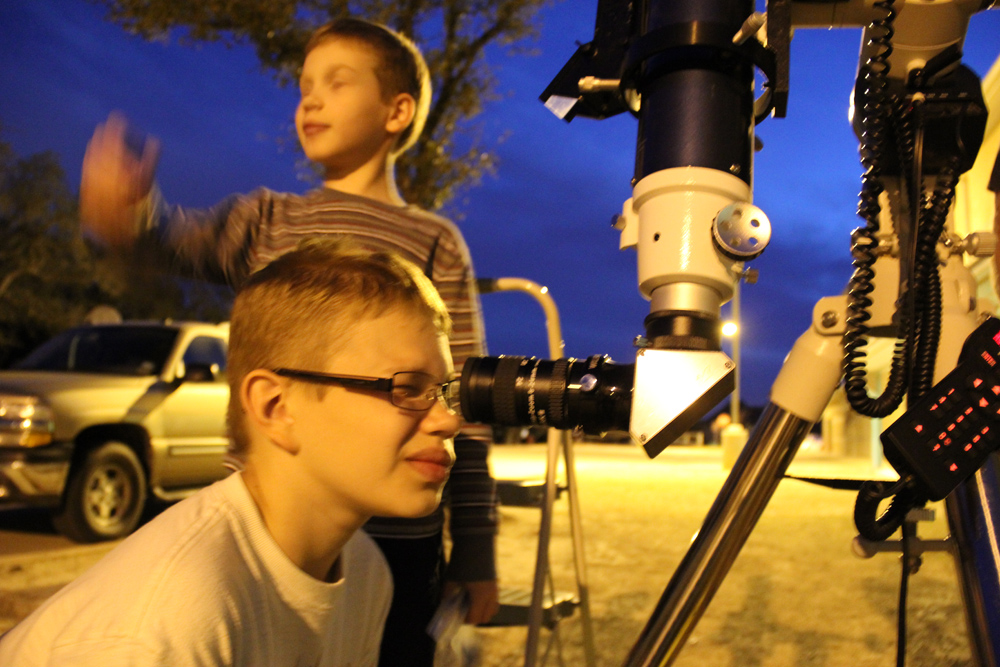
Last night, I attended the Science Share Night at Deer Creek Elementary along with two other Austin Astronomical Society members, Larry Martin and John Huntsberger. We volunteered to help out with this event by putting together a lunar phase presentation and providing telescopes and binoculars for viewing. As a child, we had science fairs where the students worked on various projects, proudly presenting them at the events. The Science Share Night, organized by the school’s PTA, took on a whole new level of sharing science. The Austin Mobile Planetarium was there and everywhere you looked, fun hands-on science activities were taking place. I would have loved to have taken part of them last night myself – just think of the great time the kids were having!

Learning how to use binoculars.

Learning how to use binoculars.

After the three of us set up, Larry remained inside for his presentation where the attendees learned the phases of the Moon using a flashlight and Styrofoam Moon and Earth. Larry put together a slideshow to play in the background of our images and sketches. We had a laminated lunar atlas set up with a few sketches next to it so that everyone could see lunar terrain and compare the sketches, which show the eyepiece view, to the atlas. Outside, John and I showed attendees how telescopes and binoculars worked while waiting for the skies to darken and the clouds to part. One child learned how to use the binoculars by locating her brother across the playground. The refractor was set up to show the attendees a chimney top and were explained why the view was upside down. I used this time to show children how to use a planisphere and John was across the sidewalk doing the same with the SkySafari app on his iPad.

The Moon wasn’t due to rise until after 6:37 pm, but we were able to eventually share views of Jupiter. The attendees witnessed John and I both laying down on our backs and doing contortionists antics during an inpromtu “finding Jupiter through our finder scopes/Telrads” moment. I should explain that Jupiter was at zenith! Although our Moon didn’t make an appearance, Jupiter’s moons put on a nice show.

Kudos to Deer Creek Elementary for providing such an amazing fun learning experience for the students and their families. And thank you for allowing us to be a part of it.

This slideshow requires JavaScript.

2013 02 17 – Theophilus, Cyrillus, Catharina

•February 17, 2013 • 3 Comments

Last night was the perfect example of a well-planned observing list being tossed out the proverbial window. Io, its shadow and the Great Red Spot were in perfect position and due to soft views, Jupiter’s bands and the GRS lacked any definition. Subtle tones were apparent, but not defined enough to attempt a rendering.

Second target of the night was the Moon. I chose Theophilus, Cyrillus, and Catharina for my sketch. It was a nice change to work a little further in from the fast moving terminator, buying a little more time to relax and enjoy the views without the worry of chasing shadow details. Seeing was still on and off so that I had to wait for moments of steadiness to study the view. More than once, I had to correct double ridges after discovering the ridgeline was single when seeing improved. My lunar session began with me standing on a small foot stool, then downsizing to standing on an old Webster’s dictionary (hey, that’s about the only use it gets these days!), and then finally being able to sit in comfort on my observing chair. Amazing how fast objects move across the sky.

201302-xTheophilusCyrillusCatherinecollage
Eyepiece sketch on black Strathmore Artagain paper, white Conte’ crayon and pencil, Derwent watercolor pencil, black charcoal, black oil pencil.

2013 02 17, 0200-0400 UT
16” f/4.5 reflector, non-driven Dobsonian mount, 8-24mm Zoom at 225x, Moon filter
44F, 40% H, clear/calm, Antoniadi III, T 5/6
Alt: 32deg 55, Az: 2472deg 16´
Phase: 97.3degrees, Lunation: 6.86 d, Illumination: 43.6%
Lib. Lat: +00:09, Lib. Long: +02.17

Theophilus
Type: complex crater
Geological period: Eratosthenian (From -3.2 billion years to -1.1 billion years)
Dimension: 104km
Height: 4400 meters
Tormented sloops and steep walls that rise 1200m, central peeks reaching heights of 1400m, flat floor, crater Theophilus B to the inner NW wall.

Cyrillus
Type: complex crater
Geological period: Nectariun (From -3.92 billon years to -3.85 billion years)
Dimension: 98km
Damaged tormented, steep slopes, crater Cyrillus A to inner WSW wall, crushed wall to the NE by Theophilus, long groove to the south leading to Catharina.

Catharina
Type: complex crater
Geological period: Nectariun (From -3.92 billon years to -3.85 billion years)
Dimension: 100km
Height: 3130 meters
Catharina P rests along the upper third and overlaps the rim of Catharina. B and C crushed its NW egde and S can be seen as a small groove on the floor near the south edge. Tormented walls.

By the time I completed the lunar sketch, my neck was already complaining, regardless of the chemical heat pack in my neck warmer to keep the inflammation at bay. I glanced up at the sky and grudgingly made the decision to call it a wrap. The DSOs on my list would have to wait for another night.

Family Star Night – Barton Hills Elementary 2013

•February 16, 2013 • 3 Comments

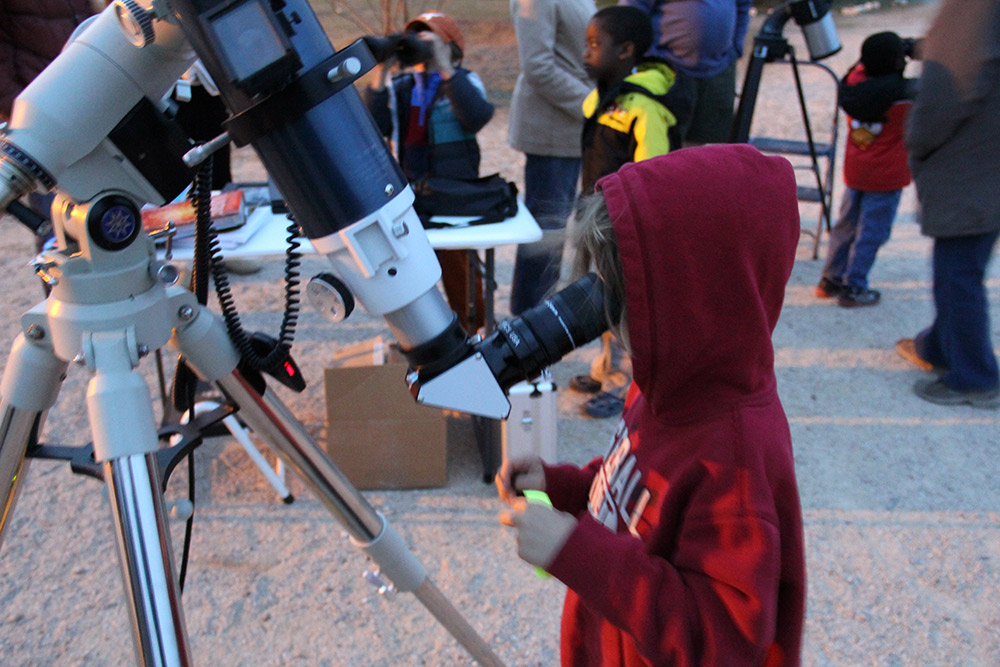
IMG_5537Outreach events are always a fun time, especially when they involve youngsters. It turned out to be a cloudy night for the Family Star Night event at the Barton Hills Elementary school. There were plenty of indoor activities for the guests to enjoy such as the Austin Mobile Planetarium, a display by the International Dark Sky Association and astronomical talks. The weather didn’t prevent a couple of us from setting up our telescopes outside for everyone to enjoy, however. The president of the Austin Astronomical Society, Joyce Lynch and her husband, Jim, showed up with a telescope and I brought a 102mm refractor along with a couple of binoculars and an assortment of other visual aids such as books, a planisphere, Rükl Atlas, and sketches. Our contact for this outreach event, Becky, was terrific and made us feel very welcomed. I was certainly thankful for the warm cup of hot chocolate and munchies she provided as well as her hospitality.102mmIMG_5534

The students and their families started arriving between 6-6:30PM and made their way inside to enjoy the mobile planetarium and other indoor activities. Once they made their way outside, there were just a few brief glances at the moon before it became nearly 100% overcast. The children insisted on looking through the eyepiece with excitement, nevertheless. It turns out that bringing the Rükl Atlas was a good decision as a group of children and their parents gathered around me and my telescope as I opened up the atlas and explained how it’s used for identifying features on the Moon. There were many questions that followed which lead to discussions on maria, dorsa, what craters are and how they were formed, domes, rimae, lunar phases and also sketching the Moon.

The binoculars were a hit and many of the kids tried their hand at looking at houses and trees further away and were given crash courses on focusing. They were explained how a refractor works and how there are specialized filters and telescopes that allow us to even observe the Sun. The students were full of questions about asteroids, orbits, the Milky Way, our solar system and gravity.IMG_5536

One of the highlights of my night, however, was showing an eager young girl how to use my planisphere. She was able to hold it over her head and tell me where various constellations would be if the skies were clear. After showing her just once how to use it, I fabricated a date and time and she successfully rotated the overlay to show the constellations and their locations. My hopes are that she’ll become a budding young astronomer and spend many hours with her father enjoying the night skies. It truly warms my heart during those special moments with the children and their parents. Thank you Barton Hills Elementary for providing such a wonderful experience for all involved!

February 2013 Issue – Sidereal Times

•February 10, 2013 • Leave a Comment

The February 2013 issue of Sidereal Times for the Austin Astronomical Society is now available for download.
UST-front-cover

Click the following link for the PDF version: February 2013 issue (6.6 MB)

Inside this issue you’ll find star party photos, chair and executive committee news, February Observing Targets, loaner scope details, Astronomy App review for Emerald Observatory, Spotlight of Steve Bosbach with the IDA, Info on the Texas Imaging Symposium, Jupiter/Moon Appulse, Classifieds and much more!

Please contact me if you’re interested in joining the club or wish for more information! It’s a very active club and has a great outreach program.

2013 01 22 – Jupiter and Moon Appulse

•January 22, 2013 • 2 Comments

Last night, we were treated to a very close appulse between the Moon and Jupiter – what a beautiful site! We’ll have to wait until the year 2026 for a closer pairing. The Moon was 78% illuminated at 10.34 days’ lunation and was just below 70 degrees in altitude at 2200 local time on January 21st (0400UT on the 22nd). Europa transited Jupiter during the session, although I was so busy with the low magnification sketching sessions that I missed it. Three other Galilean moons were aligned and plainly visible through the telescope: Ganymede, Io and Callisto (E-W).

While setting up the 102mm refractor between 1800-1830ST, it was easy to spot the Moon and Jupiter naked eye to the south. My first sketch of the event was at 1904ST (0104UT) and Jupiter was 1 degree away from the Moon. Please note that the Moon and star placements in the sketch are slightly larger than the eyepiece view. I only discovered my error when it came time to plot the stars furthest away from Jupiter and Moon. I ended up having to plot them appropriately outside of the field circle as a result. Nearly half hour later at 2017ST, there was a 0.73 degree separation.  I plotted the Moon and Jupiter’s positions and again found that I didn’t leave enough room in the field circle to include all of the stars that were in my field of view. Third time is a charm, though, and somehow I managed include the entire star field (with the exception of one star) within the circle.  By the time I completed the final sketch, the pair was its closest separation of 0.67 degree. Even though my magnitudes are a little off and I’m sure the placements could have been more accurate, the general feel of the eyepiece view is apparent.

Please click on the individual images for a closer view.

20130122-0104UT-moon-and-jup

20130122-0217UT-moon-and-jup

20130122-0400UT-moon-and-jup

Eyepiece sketches created with black Strathmore Artagain paper, white Conté pastel pencil and color pencil, black color pencil.

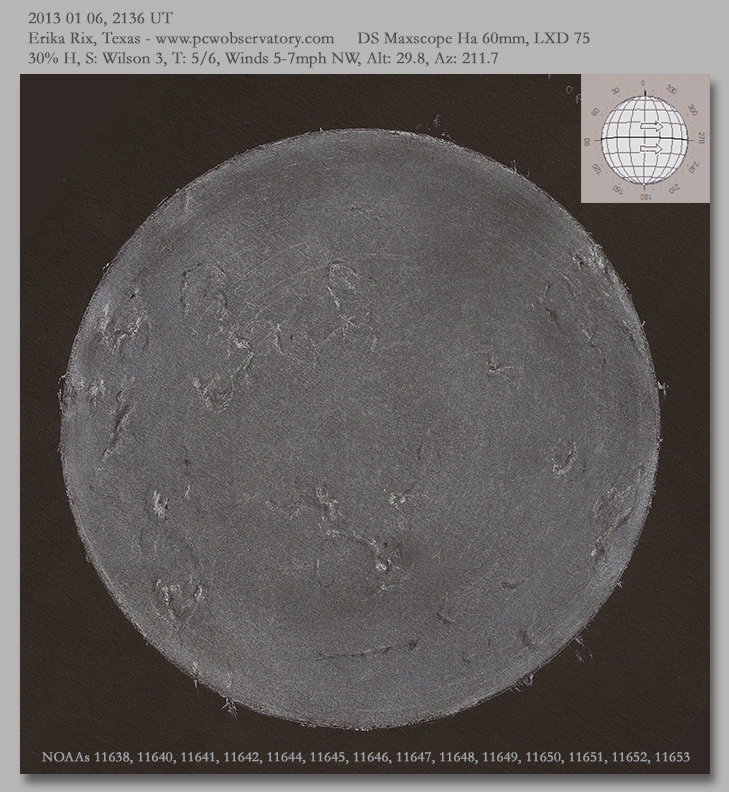
2013 01 06 – NOAAs 11638, 11640, 11641, 11642, 11644, 11645, 11646, 11647, 11648, 11649, 11650, 11651, 11652, 11653, SW Prominence

•January 14, 2013 • Leave a Comment

Fourteen active regions speckled the Sun on the 6th of January, two more than the previous day. The sunspots and active regions were small and the solar activity was still fairly low. Even so, my fascination with the Sun began in 2005, so this was the highest number of active regions I’ve observed in one sitting to date. Today, there are two larger active regions, 1654 and 1656, that are putting on quite the show with a 65% chance of M-class flares and a 10% chance of X-class flares, most likely from 1654 per Spaceweather.com. AR 1654 is facing Earth today.

I’ve rotated the two full-disk eyepiece sketches for standard orientation comparison of all visible light v/s hydrogen alpha. The SW prominence caught my eye straight away and I had hopes that it would break away or collapse on itself. It did neither during my observation, but still provided an interesting observation.

20130106WL
White light sketch created at the eyepiece with white card stock, felt-tipped black artist pen, charcoal pencil, black oil-based pencil.

20130106 halpha full disk
Hydrogen alpha sketch created with black Strathmore Artagain paper, white Conte’ crayon and pencil, white Prang pencil, black oil pencil, charcoal pencil.

20130106  SW Prom

2013 01 06 – M42/M43 (Orion Nebula)

•January 13, 2013 • Leave a Comment

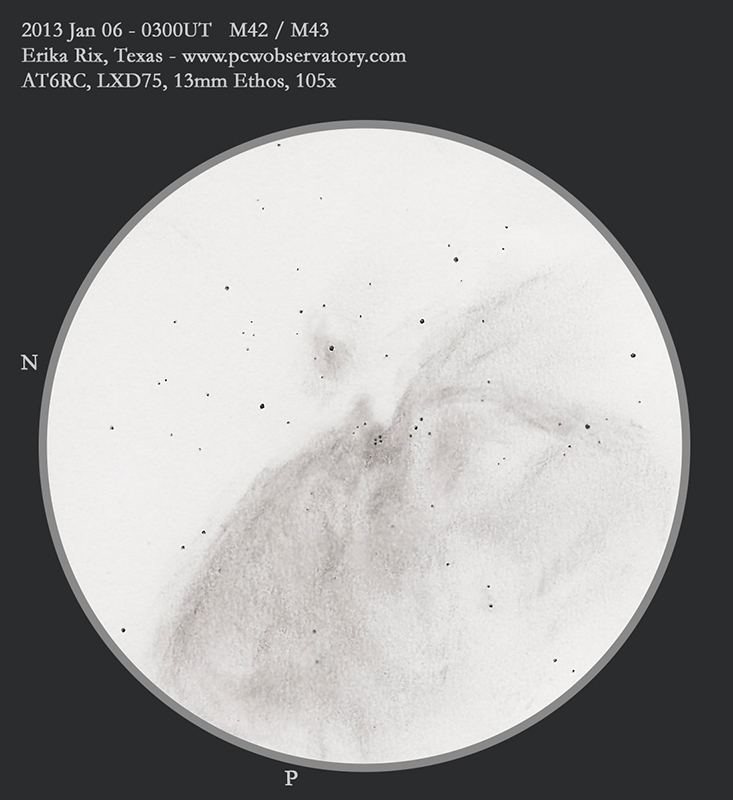
The Orion Nebula is a sight to behold in the winter skies. I’ve attempted sketching M42/M43 a few times but have yet to do it justice. Nebulae can be very tricky to accurately render, even capturing their essence can prove quite the challenge. In 2005, I diligently worked on my Orion Nebula sketch for what seemed like an eternity behind the eyepiece only to discover later that it resembled a rooster! My latest attempt was at a public star party at the Eagle Eye Observatory at Canyon of the Eagles. Typically I sketch on Rite in the Rain paper for those high humidity nights. Unprepared as I was to sketch at this star party, the paper was ordinary printer paper with the Observing Form template on it and became very soggy. Needless to say, between the lack of concentration from sketching at a public outreach event and the high humidity, the sketch suffered. Even so, all sketches are good sketches in my book, if for no other reason than spending time studying the object while it’s being drawn.

20130106 m42

Eyepiece sketch on white paper with a General Observing Form template, black felt-tipped pen, #2 pencil, blending stump loaded with charcoal, 0.5mm mechanical pencil.

M42/M43 (Orion Nebula), 1600 ly distance

M42 (NGC 1976, LBN 974, Sh2-281, h 360, GC 1179)
Cluster, reflection and emission nebula in the constellation Orion, 05h 35m 17.2s, -05º 23′ 27″, 90’x60′, 5.0vm
Discovered in 1610 by Nicolas-Claude Fabri de Peiresc

M43 (NGC 1982, H 3.1, GC 1185, CED 55G)
Reflection and emission nebula in the constellation Orion, 05h 35m 31.3s, -05º 16′ 03″, 20’x15′, 7.0vm
Discovered in 1731 by Jean-Jacques Dortous de Mairan

Orion Nebula sketch in 2005

Orion Nebula sketch in 2005

The Orion Nebula can be seen naked eye under moderately-dark skies as a faint glow around Theta Orionis in Orion’s sword. It sports a beautiful trapezium multiple star, Theta-one Orionis, with the aid of a telescope and is an amazing sight at any magnification and aperture. My sketch above shows only the upper, higher-contrast portion. There is a fainter area that, together with the upper portion, forms a loop. Next time, I’ll need to use a 34mm eyepiece to fit its entirety in one field of view at around 40x magnification. An OIII or UHC filter will add to the contrast and an h-beta filter has been stated to show more contrast in the western loop, although the rest of the nebula may diminish with its use.

January 2013 Issue – Sidereal Times

•January 9, 2013 • Leave a Comment

The January 2013 issue of Sidereal Times for the Austin Astronomical Society is now available for download.
ST cover 201301

Click the following link for the PDF version: January 2013 issue (10 MB)

Sidereal Times has a new look and along with this issue, you’ll find the December holiday party photos, chair and executive committee news, January Observing Targets, loaner scope details, Astronomy App review for Pocket Universe, Spotlight interview of Torvald Hessel with the Austin Planetarium, Photo of the Month, Teach Astronomy course available and much more!

Please contact me if you’re interested in joining the club or wish for more information! It’s a very active club and has a great outreach program.